1,4-Butanediol
CAS No.: 110-63-4
Butanediol (BDO) is a high-quality intermediate. BDO and its derivatives are widely used for producing plastics, solvents, electronic chemicals and elastic fibers.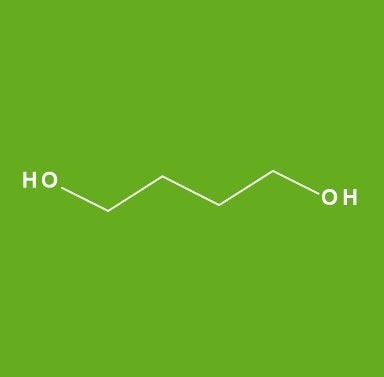
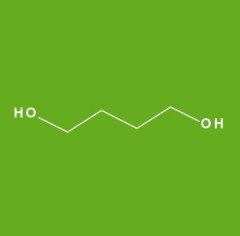
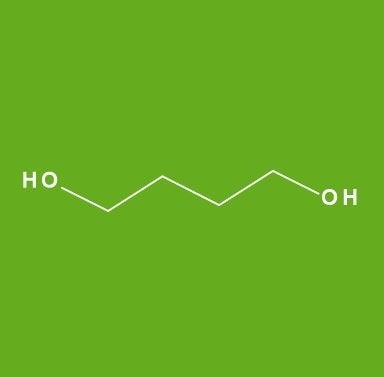
1,4-Butanediol, almost always shortened to BDO, is a straight-chain diol carrying a hydroxyl group at each end of a four-carbon backbone. At room temperature it is a colourless, odourless liquid with a noticeably syrupy body that pours slowly and clings to the walls of a container. Its boiling point is high for a molecule this small, so it stays in the reaction mass while lighter solvents leave overhead — one reason formulators keep it on the raw-material list rather than reaching for a lighter glycol.
Both hydroxyls are primary, sitting at opposite ends of a symmetrical chain. That shape makes the molecule react evenly: a polymer built on BDO comes out predominantly linear, with the chain ends where the formulator expects them and few surprises in molecular weight distribution.
We hold it within our industrial fine chemicals range for polymer producers, compounders, formulators, distributors and laboratory buyers. Almost all of them treat it as a raw material rather than a finished product — it goes into a reactor, a kettle or a blending tank and comes out again as a resin, an elastomer, a fibre or a process solvent.
If you are assessing BDO for the first time, the two questions that matter most are whether the specification meets your release limits and whether that specification holds from batch to batch. The sections below answer both, along with the storage and documentation detail regular buyers ask about.
| Chemical name | 1,4-Butanediol |
| Common synonyms | BDO; butane-1,4-diol; tetramethylene glycol; 1,4-butylene glycol |
| CAS number | 110-63-4 |
| Molecular formula | C₄H₁₀O₂ |
| Molecular weight | 90.12 g/mol |
| Appearance | Colourless, odourless liquid |
| Solubility in water | Fully miscible |
| Melting point | About 16 °C |
| Boiling point | About 230 °C |
| Assay | Agreed per order and reported on the batch certificate |
| Water content | Agreed per order |
BDO's usefulness comes from having two identical, primary hydroxyl groups, one at each end of the chain. Both are available to react, so the molecule works as a bridge rather than a cap: it links other units together and lengthens the chain instead of terminating it. That is the difference between a diol that extends a polymer and a monofunctional alcohol that stops it.
The reactions that matter commercially are straightforward. With dicarboxylic acids the hydroxyls condense to form polyesters. With diisocyanates they form polyurethanes, which is where BDO's reputation as a chain extender comes from. With phosgene they give polycarbonate structures, a smaller and more specialised outlet. BDO is also a starting block for both polyester polyols and polyether polyols, which is why polyol producers tend to be its steadiest customers.
Primary hydroxyls react with isocyanate faster than secondary ones do, so a BDO-extended system generally gels and demoulds sooner than the equivalent system built on a secondary glycol. The trade-off is working time: pot life shortens too, and the mix ratio has to be right. Running off-ratio leaves either unreacted isocyanate or soft, under-cured material, and neither shows up until the part is already made.
As an industrial fine chemicals intermediate, BDO is judged less on how it looks in the drum than on how reproducibly it runs in the reactor. Consistency in hydroxyl value and water content from batch to batch is what keeps a polymer line in specification, which is why both are agreed in writing before the first order rather than checked after delivery.
Quality is the foundation of how we work. As a specialized enterprise serving the chemical and pharmaceutical sectors, we apply staged in-process checks and a final inspection against the agreed specification before packing, and we retain samples for reference. If you prefer an independent check, we are glad to coordinate with the third-party inspection agency you appoint. Shipments travel with their certificate of analysis, packing list and safety data sheet; any item that falls short of specification is investigated, then replaced or credited. Our team supports buyers across Europe, the Americas, Australia and Japan.
It sets solid. BDO is a liquid at normal working temperatures but it freezes well above the freezing point of water, so a cold yard, an unheated container or a winter road movement can leave a drum partly solid on arrival. Bring the drum into a warm room, or stand it in a warm water bath, until the whole contents are liquid again, then roll or stir it before drawing. Never take the liquid off the top of a partly frozen drum — the fractions differ and your mix ratio will drift. Laboratory chemicals suppliers holding stock in unheated space run into this most often, and a heated bay in the store pays for itself in the first cold snap.
Yes, and how much it matters depends on your process. BDO absorbs moisture through an open bung, especially in humid weather. In a polyurethane system the water competes with the diol for isocyanate, so you consume material you have already paid for and end up with bubbles, softer parts or an inconsistent hardness reading. Keep the drum closed between draws, transfer through a closed line, and compare the water content figure against the limit you set. If a drum has stood open for some time, pull a sample and check it before charging the batch.
That is one of its main roles. BDO builds the hard segment, and because both hydroxyls are primary the reaction runs quickly and the part can be demoulded sooner than with a secondary glycol. Fine chemicals manufacturers running cast elastomer lines normally fix the NCO-to-OH ratio around their own trial data rather than a supplier figure, then hold the BDO water content tightly so that ratio stays where they set it. A small trial batch is the usual way to confirm pot life and hardness on your own system before a production run.
Treat it as an industrial chemical rather than a benign solvent. Work in a ventilated area, avoid skin and eye contact, and use eye protection and impervious gloves; the safety data sheet supplied with the order carries the full PPE and first-aid guidance. Provide spill containment around bulk tanks and drum stores — a spill is slippery underfoot as well as a clean-up job. Keep the material away from strong oxidisers and ignition sources, and check local requirements before letting wash water that carries it reach drains.
Yes, and it is common once consumption reaches a few drums a week. Plan for stainless steel or lined carbon steel with a dry nitrogen or dry air blanket, a closed transfer line and a vent that keeps damp air out. Confirm gasket, seal and pump materials with your engineering team before the first bulk delivery, and decide how tank levels and batch records will be kept so traceability survives the transfer. As a fine chemicals supplier we confirm the pack and transfer format at quotation stage; tank design and materials remain on your side.
The choice follows the property you want. Adipic acid gives flexible, lower-melting polyesters and is the usual partner for polyester polyols in foams and coatings. Terephthalic acid or its dimethyl ester gives the stiffer, more crystalline backbones behind polybutylene terephthalate. Succinic and other diacids are used where a biodegradable or specialty polyester is the target. In practice the acid and the diol are chosen together, and the reaction is run until the acid value and hydroxyl value reach the targets your process team sets.