

• 1,4-Butanediol
  • 1,4-Butanediol
  • 1,4-Butanediol

Description

Product Overview

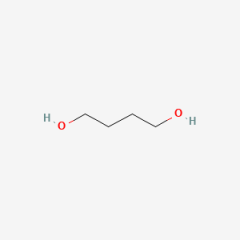
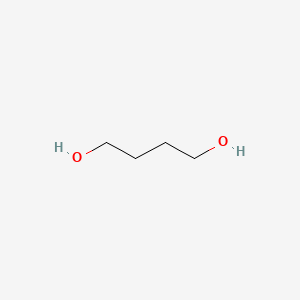
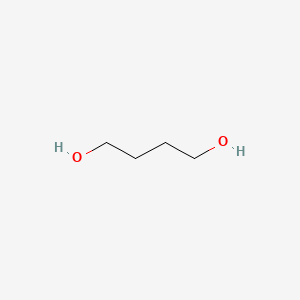
1,4-Butanediol, almost always shortened to BDO, is a four-carbon diol with a hydroxyl group at each end of a straight chain: C4H10O2, HO(CH2)4OH, molecular weight 90.12. It is colourless, odourless and mixes with water in any proportion, and at working temperature it is a slightly viscous liquid. In an unheated warehouse it can set to a soft, waxy solid, which is simply what this glycol does as it cools rather than a sign of a spoiled lot.

Very little of the material sold commercially is used unchanged. Most of it is converted: cyclised into tetrahydrofuran, better known as oxolane, reacted with diisocyanates to build polyurethanes, condensed with dicarboxylic acids into polyesters and polyester polyols, or reacted with phosgene to make polycarbonates. Downstream, those derivatives reach technical plastics, elastic fibres, coatings, adhesives and the solvents and cleaning chemistries used to manufacture electronics.

Buyers arrive at this grade for two different reasons. Some need a bulk intermediate for a resin, fibre or solvent line and care about assay, water content and a source that behaves the same way every time. Others need a properly documented reference material, and this record is one: the compound has a published single-crystal structure, CCDC 132863, which is useful for method work, teaching and citation. Both needs are answered by the same specification data and the same lot documentation.

We supply 1,4-butanediol within a fine chemicals range that also covers glycols, solvents and laboratory reagents, and we work with laboratories, distributors and production sites that need the identity, the paperwork and the delivery to line up.

1,4-Butanediol_small.png

Specifications

Property Value
Chemical name 1,4-Butanediol
CAS number 110-63-4
Synonyms Butane-1,4-diol; tetramethylene glycol; 1,4-butylene glycol
Molecular formula C4H10O2 (HO(CH2)4OH)
Molecular weight 90.12 g/mol
PubChem CID 8064
CCDC deposition number 132863
Appearance Colourless, odourless, viscous liquid or soft solid, depending on temperature
Melting point 16 °C
Boiling point 230 °C
Water solubility Miscible in all proportions
Hazard summary Irritant; the safety data sheet carries the full classification

Industrial Applications

  • Tetrahydrofuran and oxolane production — the largest single outlet. BDO is cyclised to THF, the solvent used in polymerisation, organometallic chemistry and pharmaceutical processing, and buyers on this route watch water content and batch-to-batch consistency more closely than anything else on the specification.
  • Polyurethane systems — each hydroxyl end reacts with diisocyanate, so BDO works as a chain extender in cast elastomers and as a short, rigid segment in foam, coating and adhesive formulations.
  • Polyester and polyester polyol manufacture — condensation with dicarboxylic acids produces saturated polyesters for powder coatings, films and fibres, and BDO is also a building block for the polyester polyol and polyether polyol streams used across foams and coatings.
  • Polycarbonates — reaction with phosgene, where BDO supplies the diol component of the polymer backbone.
  • Elastic fibres and technical plastics — derivatives of BDO appear in spandex-type fibres and in engineering plastics that need a flexible four-carbon segment in the chain.
  • Electronic chemicals — BDO and its derivatives are used in electronic chemicals, an outlet that values the combination of a high boiling point and complete water miscibility.
  • Laboratory chemicals supply — laboratory chemicals suppliers hold this diol for their own laboratory customers, who usually need a documented identity alongside a small working quantity rather than a production-scale delivery.
1,4-Butanediol_3D_Structure.png

Temperature Behaviour and Handling

  1. Check the drum before you move it. If the contents have set, treat the package as a solid, use a drum trolley or pallet truck instead of tipping it, and never drop or roll a drum that may still be cold.
  2. Move it into a warm, ventilated area. Keep it away from open flames, steam lines and hot surfaces, because the aim is gentle, even warmth rather than a hot spot on one side of the drum.
  3. Apply the heat gradually. A purpose-made drum heater or a warm water bath is the usual approach; a heat gun or direct flame will scorch the product and damage the container.
  4. Give it time. A full drum takes time to melt through, and the outer layer can be liquid while the core is still solid, so rotate the drum or use a drum stirrer as it warms.
  5. Mix before you sample. Material that has been partly solid is not homogeneous, and a sample drawn from the liquid layer will not represent the lot your quality team is releasing.
  6. Look at it once it is fully liquid. A properly melted lot is clear and colourless; if it stays cloudy or shows a separate layer, stop and speak to us before running it.
  7. Reclose the drum properly when you have finished. The product is fully miscible with water, so an open bung in a humid store is an easy way to pick up moisture, and a labelled, sealed drum also keeps the batch traceable.

Crystallographic Reference Data

1,4-Butanediol has a published single-crystal structure, deposited with the Cambridge Crystallographic Data Centre under CCDC 132863. The deposit is linked to two references: the associated article, DOI 10.1002/(SICI)1521-3773(20000303)39:53.0.CO;2-E, and the crystal structure data set itself, DOI 10.5517/cc4g7xq. Together they carry the unit-cell data and atomic coordinates for the pure compound.

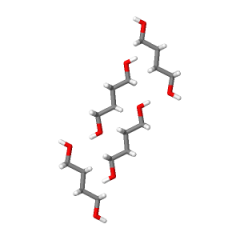
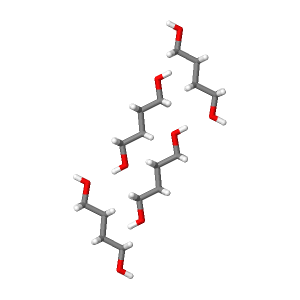
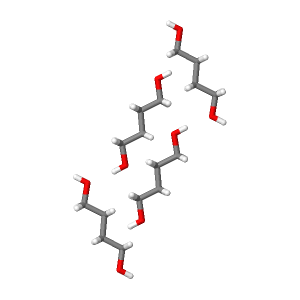
The value of a record like this is narrow but real. It settles the connectivity question, confirming a four-carbon chain with a hydroxyl at each terminus and no branching, and it shows how the molecules sit together in the solid state. The 3D structure drawing and the crystal structure image supplied with the product are two views of the same model: one shows the shape of the single molecule, the other the arrangement in the lattice, which is the part that explains why the material sets the way it does on cooling.

Where it gets used: analytical groups setting up an X-ray powder diffraction method start from a deposited structure so they know which reflections to expect; academic and contract laboratories cite the CCDC number when they report a solid-state form; and technical files often quote it when a customer asks how the identity of the compound was established. The same entry is cited in fine chemicals literature on diols and on the solid-state behaviour of small molecules.

What the record is not: it is not a lot-specific result. The structure is a property of the compound; the assay, water content and colour belong to the individual batch, and those are the values your specification should be written against. If a technical file of yours needs the CCDC number and both DOIs quoted, ask and we will put them in writing with the lot documents.

Grade Fit and Analytical Checks

As a fine chemicals manufacturer, we quote 1,4-butanediol against the limits you set rather than against one fixed house grade, because the same drum can be perfectly suitable for one process and marginal for another. The conversation usually settles on five numbers, and all five should be written on the specification before an order is placed.

Assay comes first. Gas chromatography is the usual method for a glycol of this volatility, and the result is far more useful when it travels with the method, the column and the detection conditions rather than as a bare percentage. Water is the second, normally by Karl Fischer titration, with a limit that reflects how moisture-sensitive your reaction actually is.

Colour is the third. Coatings, fibres and electronic chemicals often specify a colour value, because a yellow cast in the drum carries into the finished product. Acidity and carbonyl content complete the list for polymer producers, since both influence reaction rate and the molecular weight you end up with.

Ask for the result on the lot you are buying, not a typical value. An in-house method needs to be confirmed as runnable on our side before the lot ships. Where you are already working to an existing specification, aligning the test methods usually matters more than matching a headline purity figure.

1,4-Butanediol__Crystal_Structure.png

Safety, Storage and End-Use

  • Hazard classification — the grade is classified as an irritant, and the pictogram shown with the product images is the one you will find on the label and on the safety data sheet. Read the sheet before the first drum is opened.
  • Ventilation and protective equipment — handle it in a ventilated area with gloves, goggles and a work apron. Risk rises when the material is warm and being poured or pumped rather than sitting closed in its drum.
  • Storage conditions — keep drums sealed, labelled and upright in a cool, dry, well-ventilated store, away from oxidisers and ignition sources. Hold the store above the melting point only if the material has to be pumped rather than scooped.
  • Moisture control — because it is fully miscible with water, every open bung is a chance for the water content to drift. Reseal after each use and keep partially used drums under a tight lid.
  • The safety data sheet — every consignment includes the sheet for this grade, which is the document most laboratory chemicals suppliers and their customers check first when a drum arrives on site.
  • End use — this is an industrial intermediate supplied for manufacturing, formulation and laboratory work. Confirm the regulatory position for your country and your application before ordering, particularly where the finished product carries its own registration requirements.

Ordering and Delivery

  1. Send the specification you need, covering assay and method, water limit, colour value and any in-house test your quality team will run on arrival.
  2. Tell us the pack format and quantity your site can handle. We confirm what is available on that format and the lead time for your destination before the order is placed.
  3. Confirm the commercial terms in writing: price basis, Incoterm, port of discharge and payment terms. These are quoted per order and vary with volume and destination.
  4. Ask for the documentation your QA team needs. As a fine chemicals manufacturer we issue the certificate of analysis against the method agreed on the specification, and anything your customs broker wants in particular should be requested at the quotation stage.
  5. Plan for temperature on arrival. In cold months, book a warm, ventilated unloading area or allow time to warm the drum before production starts; that decision is much easier before the delivery than after it.
  6. If you are one of the laboratory chemicals suppliers or distributors repacking for your own customers, send the pack sizes, labelling requirements and any artwork with the enquiry so they can be confirmed before production.
Irritant

Spill Clean-Up & Solvent Use

  • Contain, absorb, bag — 1,4-butanediol is miscible with water in every proportion, so hosing a spill down does not dilute it into something harmless; it spreads the glycol across the floor, into joints and towards the nearest drain. Bank up the pool with sand, vermiculite or a commercial chemical absorbent, sweep the saturated material into a heavy-duty bag or a lidded drum, mark it as chemical waste and send it down the route your site uses for spent solvents rather than into general refuse.
  • A cold spill is a solid, not a puddle — below about 16 °C the material sets to a soft wax. Scoop it up with a plastic scraper and a dustpan instead of pouring absorbent over it, and keep steam lances and hot water away from the area: heat melts the product back into the floor and adds water to a clean-up that is already awkward.
  • Smell will not warn you — the grade is odourless, so a still nose does not mean the area is clear. Ventilate mechanically while you work and keep ignition sources, hot plates and steam lines out of the cordoned area.
  • Mind the people and the floor — gloves, goggles and an apron for anyone dealing with the spill, and a cordon around the pool, because a glycol film on a smooth floor is genuinely slippery. Finish with a detergent wash and a clean water rinse rather than a dry sweep.
  • Most solvent use is indirect — the largest single outlet for this diol is cyclisation to tetrahydrofuran, the oxolane that does the solvent work in polymerisation, organometallic and pharmaceutical processing. On that route 1,4-butanediol is the feedstock, not the liquid in the reactor.
  • Direct solvent use is small but real — it is a protic solvent in its own right and is used that way in low-volume specialty work: holding an additive in solution through a warm reaction, or making up a water-cosolvent system that will not flash off. Those volumes are minor next to the conversion routes, so treat it as a specialty duty rather than a bulk solvent purchase.
  • It stays in the system — with a boiling point near 230 °C, this is not a drop-in replacement for acetone, methanol or another solvent that leaves by evaporation. If the film or the batch has to dry, the glycol will still be there at the end, so choose it only where a high-boiling, water-miscible liquid is what the process actually needs.
  • Test compatibility, not just miscibility — water miscibility says nothing about resins, elastomers or additives. Run a small trial inside your own formulation and check the pump seals and gaskets that will carry the liquid before a process is moved across. Tell us the duty when you enquire and we will confirm the lot data and the sample quantity available for evaluation.

Quality Control & Inspection

Quality is the foundation of how we work. As a specialized enterprise serving the chemical and pharmaceutical sectors, we apply staged in-process checks and a final inspection against the agreed specification before packing, and we retain samples for reference. If you prefer an independent check, we are glad to coordinate with the third-party inspection agency you appoint. Shipments travel with their certificate of analysis, packing list and safety data sheet; any item that falls short of specification is investigated, then replaced or credited. Our team supports buyers across Europe, the Americas, Australia and Japan.

FAQ

Q1. Is 1,4-butanediol the same compound as tetramethylene glycol?

Yes. Tetramethylene glycol, butane-1,4-diol and 1,4-butylene glycol are all names for the same four-carbon diol, CAS 110-63-4. Older fine chemicals catalogues and some polymer datasheets still use the tetramethylene glycol name, which is why a specification written years ago can look like a different material. Quote CAS 110-63-4 on the purchase order and the naming stops being a risk at goods-in.

Q2. Can 1,4-butanediol be used in cosmetic or personal-care formulations?

Published safety reviews have concluded that the available data are not sufficient to establish it as safe under the intended conditions of use in cosmetic formulations, so it should not be treated as a cosmetic ingredient. We supply as a fine chemicals manufacturer for industrial, formulation and laboratory work rather than for consumer or personal-care products, and any application that carries its own regulatory filing should be checked against the rules for that market before a trial begins.

Q3. What should I do if 1,4-butanediol spills or gets washed with water?

Absorb it with inert material such as sand, vermiculite or a commercial spill absorbent, then bag the residue for disposal under your local rules. Because the product mixes with water in any proportion, adding water does not separate it out or make it safe to discharge; it simply spreads the material further. Prevent it reaching drains or watercourses, ventilate the area, and wear gloves and eye protection while you clean up. The safety data sheet carries the first-aid and disposal detail to follow.

Q4. Is 1,4-butanediol ever used as a solvent in its own right?

Published descriptions list it as a protic solvent as well as an intermediate, and it does take that role in smaller-scale and specialty work, although most commercial volume is converted into other chemicals long before it reaches an end use. Where it is used directly, the appeal is the combination of complete water miscibility and a high boiling point, so it stays in the system instead of evaporating away. Test it in your own formulation before switching from another solvent, because miscibility alone does not guarantee compatibility with every resin or additive.